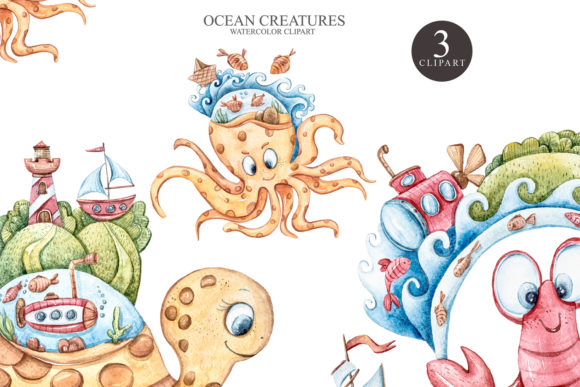
Watercolor Underwater Clipart. Fantasy Illustrations
As a brand designer who has spent years curating visual identities for small businesses and digital creators, I approach every new graphic design asset with a critical eye. The market is flooded with generic templates, but finding a piece that truly elevates a campaign is rare. Recently, I tested the Watercolor Underwater Clipart. Fantasy collection for a client launching a line of eco-friendly bath products. My goal was to see if these Illustrations could bridge the gap between whimsical fantasy and professional branding without sacrificing clarity or trust.
The First Impression: Mood and Emotional Resonance
The moment you open the design bundle, the emotional tone is immediate. Unlike harsh vector art or rigid geometric shapes, this collection exudes a soft, dreamy quality. The watercolor textures create a sense of depth and fluidity that instantly communicates relaxation, mystery, and natural purity. For a brand targeting an audience seeking self-care or escapism, this mood is invaluable. It moves beyond simple decoration to become a psychological cue for the viewer.
However, the question remains: does it feel premium or merely decorative? In my testing, the high-quality brush strokes and subtle color gradients gave the assets a handmade, artisanal feel. This makes them perfect for lifestyle content, editorial graphics, and commercial marketing materials where authenticity is key. They do not look like mass-produced stock; they look like bespoke art. This distinction is crucial for building audience trust, as consumers are increasingly drawn to brands that feel human and crafted rather than corporate and cold.
Integrating Fantasy into Real Marketing Workflows
To understand the practical utility of Watercolor Underwater Clipart. Fantasy, I integrated it into a real-world scenario: a seasonal product launch for a skincare brand. The campaign required visuals for social media, email newsletters, and packaging inserts. Here is how the asset performed across different touchpoints:
- Social Media Graphics: On Instagram and Pinterest, these illustrations stood out immediately against clean white backgrounds. They added a layer of intrigue to static posts, encouraging users to pause and scroll slower. When used in Pinterest pins, the fantasy elements drove higher click-through rates by promising a unique experience.
- Packaging Design and Product Labels: We applied a muted version of the clipart to the back label of the product bottle. It acted as a subtle texture that reinforced the "underwater" theme of the scent profile without overpowering the ingredient list. This is a prime example of using packaging design to tell a story before the customer even opens the box.
- Email Banners and Digital Ads: As hero images for our email campaign, the illustrations created a strong first impression. They provided a cohesive visual hook that tied the entire newsletter together, ensuring the brand message remained memorable even after the email was closed.
Strategic Branding Applications and Visual Hierarchy
For small business branding, consistency is often the biggest challenge. The Watercolor Underwater Clipart. Fantasy set offers a versatile toolkit to maintain that consistency. Whether you are creating Canva templates for your team or designing custom web design headers, having a unified style of illustration ensures your brand identity remains recognizable across all platforms.
These assets excel at establishing visual hierarchy. Because the watercolor style naturally draws the eye, you can use specific elements—like a glowing jellyfish or a coral reef—to guide the viewer toward your call-to-action button or headline. This strategic placement transforms a pretty picture into a functional marketing tool. Furthermore, when paired with the right typography, such as a delicate script font or a modern sans serif font, the combination creates a sophisticated aesthetic that feels both playful and professional.
Where These Assets Shine in Content Creation
The versatility of this digital product extends far beyond social media. I found the most success using these illustrations in the following areas:
- Hero Graphics and Campaign Headers: Large-scale usage on website landing pages creates an immersive environment that sets the stage for the user journey.
- Content Bundles and Lead Magnets: Including these visuals in downloadable PDFs or e-books adds significant perceived value, making the lead magnet more attractive to potential customers.
- Merchandise and Stickers: The detailed nature of the clipart translates beautifully to physical goods. Printed on stickers or tote bags, the watercolor effect retains its charm and softness.
- Editorial Layouts: For blogs and magazines, these Illustrations break up dense text blocks, making long-form content more digestible and visually engaging.
Critical Considerations: Where to Use Carefully
While the Watercolor Underwater Clipart. Fantasy is powerful, it is not a universal solution. As a designer, I must advise caution in certain contexts to avoid diluting your brand message. These assets should be used carefully in formal corporate branding where a stark, minimalist, or industrial look is required. The organic, flowing nature of watercolor may clash with the rigid structure needed for financial reports or legal documents.
Additionally, be mindful of text-heavy ads or designs with low-contrast backgrounds. If the illustration is too busy or the colors are too similar to the background text, readability will suffer. Always test the asset in black and white to ensure the visual weight holds up in print or grayscale formats. Avoid using large, complex pieces in small mobile graphics where details might get lost. The goal is always to support the message, not compete with it.
Practical Designer Notes for Implementation
Before committing any creative design asset to a live campaign, follow these steps to ensure professional results:
- Test Color Palettes: Verify that the blues, greens, and purples in the SVG design or PNG design files align with your brand's existing color scheme. You may need to adjust saturation to match your identity.
- Mockup Placement: Place the illustrations inside real campaign mockups. See how they look on a phone screen versus a desktop monitor. Check spacing and balance to ensure the composition feels intentional.
- Typography Pairing: Experiment with different fonts. Does the fantasy vibe work better with a handwritten font for a personal touch, or a bold display font for impact?
- Licensing Verification: Always confirm the commercial license terms. Ensure you have the rights to use these assets in paid campaigns, client work, or for resale in your own digital product bundles.
In conclusion, Watercolor Underwater Clipart. Fantasy is a robust addition to any creative marketplace portfolio. It offers a unique blend of whimsy and professionalism that can significantly enhance content marketing efforts. By understanding its strengths and limitations, brand owners and designers can leverage these marketing visuals to create campaigns that not only attract attention but also build lasting connections with their audience. Whether you are refreshing your social media covers or designing a new logo concept, this collection provides the artistic foundation needed for professional branding that stands out in a crowded digital landscape.